
Imagine this…
A manager is sitting with 12 Excel sheets open.
The finance team is waiting for sales numbers.
Sales is waiting for inventory confirmation.
HR hasn’t updated attendance yet.
And the CEO wants a dashboard — right now.
Sounds familiar?
For years, businesses relied on Power BI and Tableau to “visualize” their data. But here’s the truth no one talks about:
Visualization is powerful — but what if the data itself is scattered?
For years, companies believed that better dashboards meant better decisions.
So they invested in Power BI.
They adopted Tableau.
They hired analysts.
Yet something still felt incomplete.
Because the problem was never just about dashboards.
The problem was about disconnected systems.
That’s where the real problem began.
Before Odoo: The Dashboard Chaos
Power BI and Tableau are excellent tools. They create beautiful dashboards. But they depend on something critical:
👉 Clean, structured, and integrated data.
And most companies didn’t have that.
Common Problems Offices Faced:
- Data stored in different software
- Manual exports from CRM, accounting, HR, inventory
- Excel-based consolidations
- Delayed reports
- IT dependency for dashboard updates
- Time-consuming data cleaning
Most growing companies operate on multiple software platforms.
CRM in one tool—Accounting in another—HR on a separate system—Inventory managed differently—Sales data in Excel
"When leadership asked for insights, teams had to collect data before they could analyze it."

Power BI & Tableau: Powerful but Dependent
Power BI and Tableau are excellent visualization tools.
They transform data into beautiful charts and graphs.
But they depend on:
- Clean data
- Structured databases
- Proper integrations
- Continuous maintenance
- Technical expertise
Here’s the difference.
Power BI and Tableau sit on top of your data. Odoo becomes your data itself. That changes everything.
Where Business Runs & Dashboards Build Themselves
With Odoo, every department works inside one connected ecosystem.
CRM → Sales → Purchase → Inventory → Accounting → Payroll → Attendance → Manufacturing → Projects
"All connected. In real time."
Why Businesses Are Choosing Odoo Over Separate BI Tools
The shift is not about replacing BI.
It’s about eliminating unnecessary complexity.
Here’s why Odoo is gaining stronger preference today:
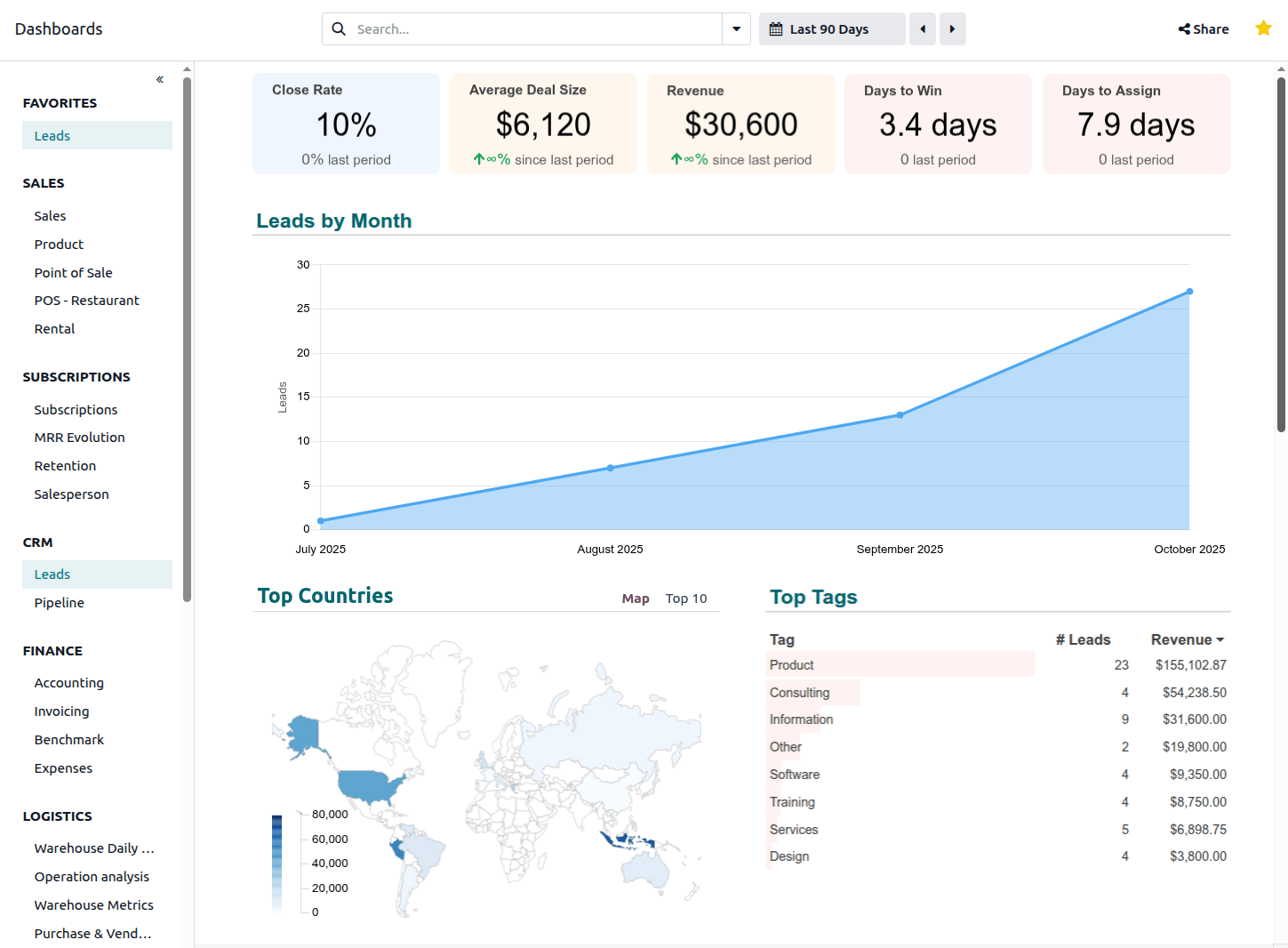
- Real-Time Data
Power BI dashboards often depend on scheduled refreshes.
Odoo dashboards update instantly because the transaction happens inside the system itself. - One Source of Truth
When departments use different software, numbers rarely match.
Sales shows one revenue figure. Accounting shows another. Inventory reports something different
With BI tools, you need:
i) Data modeling
ii) ETL processes
iii) Technical expertise
iv) Integration maintenance
With Odoo, every department works in the same ecosystem. Everyone sees the same numbers.

Shellkube + Odoo = Smart Business Future...Imagine Your Business 2 Years From Now
Implementing Odoo is not just installing software.
It Requires:
- Analyzing your processes
- Removing bottlenecks
- Automated workflows
- Integrated departments
- Building live dashboards
- Migrating data
- Providing ongoing support
At Shellkube, we:
Analyze your current operations — Identify inefficiencies — Design automated workflows — Integrate all departments — Deliver real-time dashboards — Provide long-term support
You don’t need multiple tools for your reports.
You need one intelligent system.
Imagine your business two years from now.
No manual data chasing.
No inter-department confusion.
No separate BI tool dependency.
No waiting for consolidated reports.
Just one system. One dashboard. One truth.

Why manage data in pieces…
When you can manage your entire company in one intelligent platform?
Join Odoo with Shellkube today.
Let your CRM, Sales, Purchase, Accounting, Payroll, Attendance, and Inventory work together — automatically. Because the future belongs to businesses that integrate, automate, and decide faster.
“When systems stand divided, effort is multiplied — but when they unite, clarity emerges, decisions accelerate, and growth becomes unstoppable.”