

The Small Habit That Creates Big Problems
Almost everyone has experienced this at work. A task is written on a piece of paper, another is saved in a phone note, and a few more are shared casually during a meeting or over WhatsApp. At that moment, it feels convenient. Everything seems under control.
But days pass. Papers go missing. Messages get buried. Notes are forgotten. Slowly, some tasks stop existing altogether—not because people didn’t want to complete them, but because they no longer knew where those tasks lived.
This isn’t just a personal habit problem.
This is exactly how many companies operate too.
This is how productivity quietly breaks down in many offices.
A Familiar Office Story (You’ve Probably Seen This)
I remember one of my friend told me that in her office where people worked sincerely, yet deadlines were constantly missed. Employees wrote their work in diaries, managers assigned tasks verbally, and follow-ups happened in meetings. Everyone believed they were managing tasks—but in reality, tasks were scattered across too many places.
When something was delayed, the first reaction was to question effort. “Why wasn’t this done?” or “Who was responsible for this?” became common questions. What was rarely questioned was the system itself.
Over time, stress replaced structure. People spent more time remembering tasks than completing them.
Eventually, when work is delayed, pressure increases.
People are blamed, but the real issue is task visibility.

When Tasks Are Not Tracked, Stress Becomes the Tracker
In such environments:
- Managers keep reminding instead of managing
- Employees feel overwhelmed
- Productivity depends on memory, not systems
Meetings are spent asking:
- “Did you complete this?”
- “Who was handling that?”
- “When was this assigned?”
This is where task management stops being work—and becomes stress.
Companies Struggle With Tasks Too
Many organizations run entire projects the same way individuals manage personal to-do lists—spread across emails, spreadsheets, chat messages, and verbal discussions. There is no single place where work is clearly defined, assigned, and tracked.
As projects grow, this lack of structure becomes expensive. Delays increase, accountability weakens, and teams feel overworked even when they are giving their best.
This is where proper project and task management becomes essential, not optional.
Discovering Odoo Project & Task Management at Shellkube
At Shellkube, task and project management is handled through Odoo Project & Task Management, and the difference is clearly visible.
Here, tasks don’t live on paper or in chats.
They live inside the system.
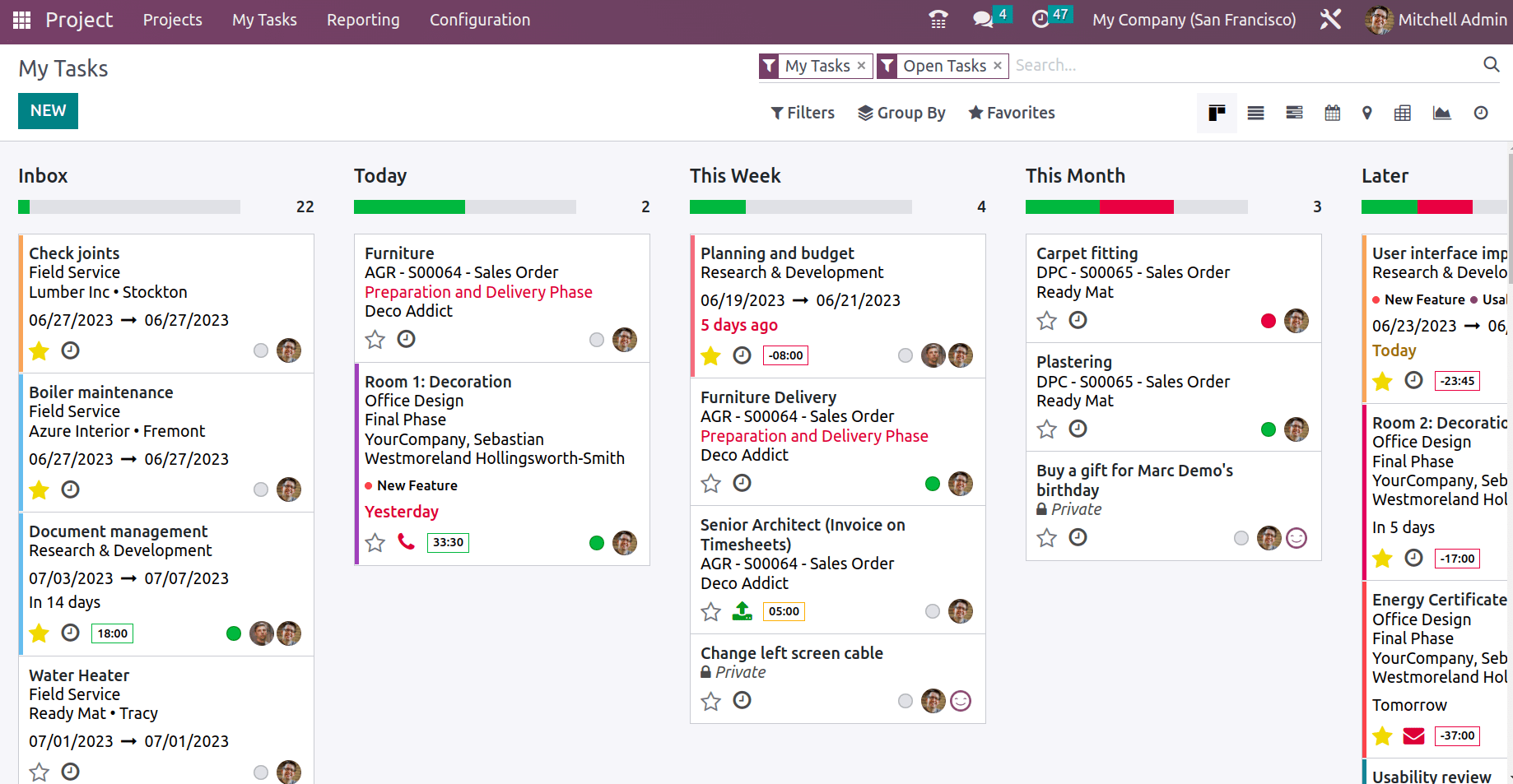
Work was organized project by project. Each task had a clear owner, a defined timeline, and visible progress. Instead of asking colleagues for updates, you could simply look at the system and know exactly where things stood.
What Changed Immediately
- Every project is clearly defined
- Tasks are created project-wise
- Each task has:
- An owner
- A deadline
- A priority
- A status
Work is no longer dependent on memory or reminders.
How Project-Based Tasks Change Daily Work
When tasks are created within projects, work feels lighter and more controlled. You no longer need to remember what to do next—the system tells you. You no longer need to chase people for updates—the progress is visible.
Even collaboration improves naturally. Team members understand their responsibilities better, dependencies become clear, and work moves forward without constant reminders.
Instead of confusion, there is flow.
Fewer Follow-Ups, More Focus
One of the biggest benefits of Odoo task management is reduced dependency on follow-ups.
- Tasks can be assigned to colleagues
- Dependencies are clearly marked
- Comments and updates stay within the task
Instead of asking “What’s the status?”,
teams simply check the system.
They know exactly what to do, by when, and why it matters.

As teams grow, informal task management simply doesn’t scale. What works for two people fails for twenty. Odoo’s project and task management brings discipline without micromanagement.
It allows companies to grow while keeping work organized, transparent, and predictable. Employees feel less stressed, managers feel more in control, and projects get completed on time.
I’ve watched simple tasks turn into major delays just because no one was really tracking them. If you’re at that stage, it’s better to act now—before it’s too late.
Hurry up—because every delayed task compounds tomorrow’s problems. Let Shellkube transform how your work gets managed.